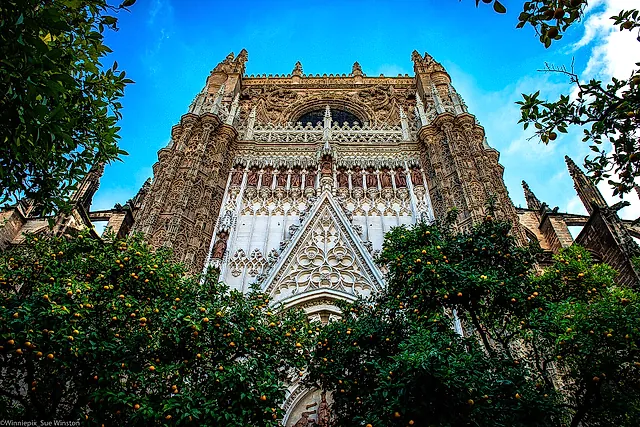
Seville · Avenida de la Constitución
Seville Cathedral: tickets, hours and how to get there
One ticket for the cathedral, the Giralda and the Church of El Salvador. Official prices, opening hours, the Giralda climb and practical tips.
Today
Opening hours for every month are on the Opening hours page.
Checked against the official website on October 22, 2026 · Official source
In short
- Official tickets are sold by the Cabildo, the cathedral's governing chapter, on catedraldesevilla.es: 13 € online or 14 € at the ticket office, reduced 7 € and 8 €, children up to 13 free with an adult. The general ticket includes the cathedral, the Giralda and the Church of El Salvador.
- Monday to Saturday 10:45 to 19:00, Sunday from 14:30 to 19:00. The ticket office closes at 18:00. The Cabildo changes the hours by season and for worship, so check the official site before you go.
- The visit starts at the Giralda. The climb is mostly by ramps rather than stairs: 34 ramps and 17 steps according to the Cabildo. Prams, wheelchairs and large bags are not allowed on the tower.
- The Cabildo estimates the visit at 75 minutes. Shoulders must be covered and flash and tripods are not allowed.
- Our partner Tiqets sells skip-the-line tickets and tours. Official ticket: 13 € online (14 € at the ticket office). Skip-the-line ticket via Tiqets: 18 €, with skip-the-line entry and instant delivery. The Cabildo says it does not handle claims for tickets bought from third parties.
The Giralda: from minaret to bell tower
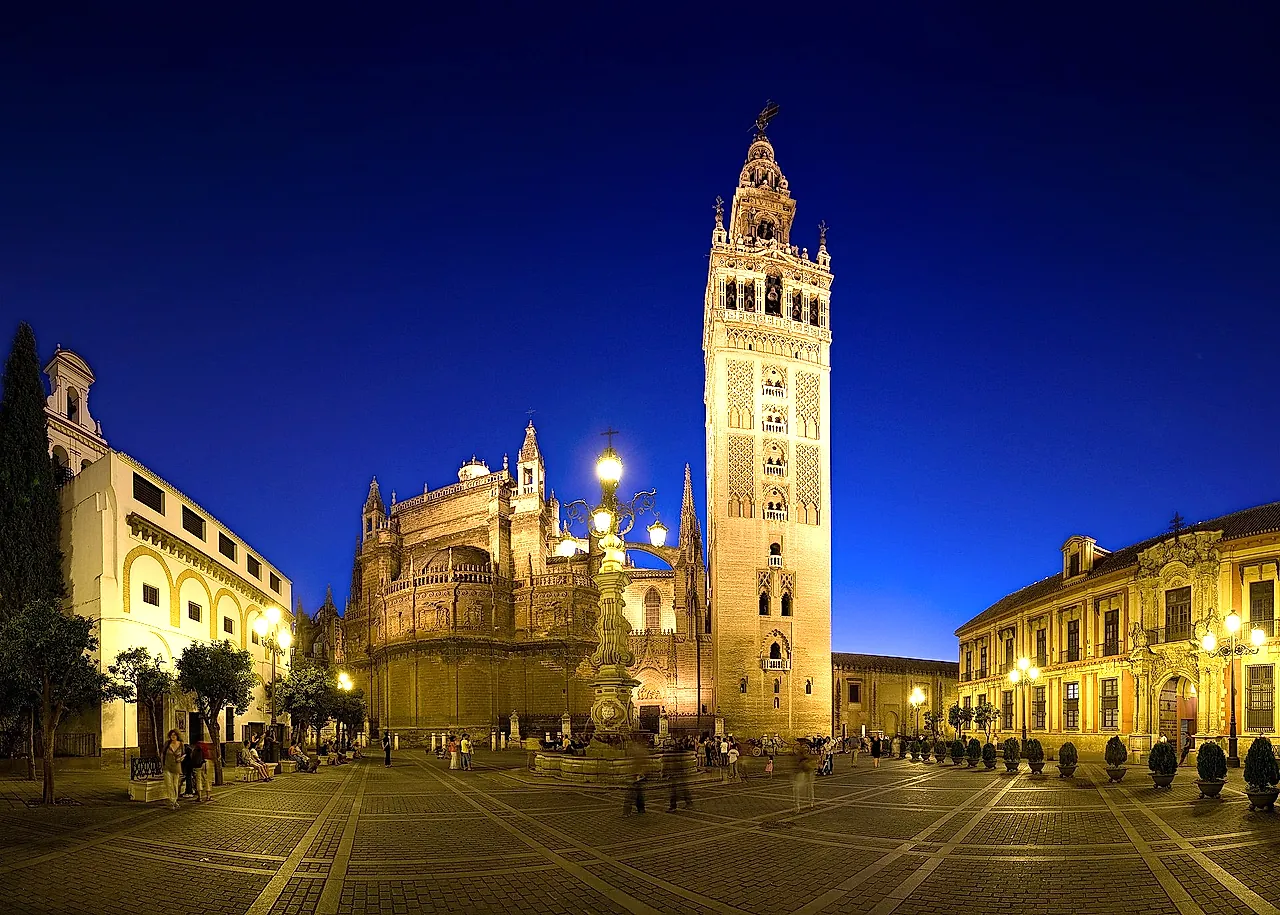
The Giralda was the minaret of the Almohad mosque that stood on the site. According to the Cabildo, the mosque was ordered by the caliph Abu Yaqub Yusuf and built between 1172 and 1198. In the 16th century the top of the tower was replaced by a Renaissance crown by Hernán Ruiz, with the bronze Giraldillo, a statue of about 4 metres, on the summit.
The UNESCO text puts the height at 97.52 metres up to the Giraldillo, while other sources give higher figures, so we say about 100 metres. Inside, you climb mostly by wide ramps rather than stairs; the Cabildo says they were built wide enough to ride up on horseback. Our Giralda climb guide has the details.
The largest Gothic building in Europe
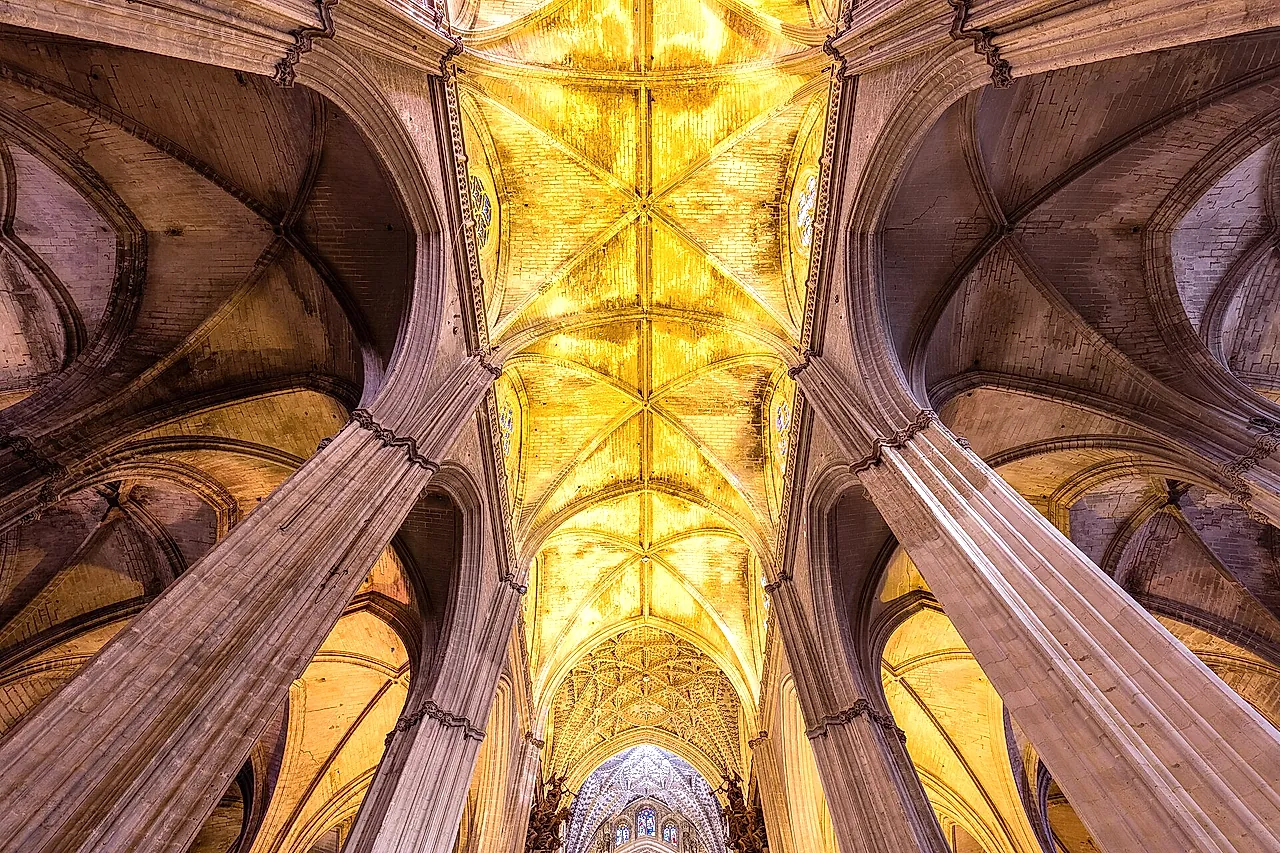
UNESCO describes the cathedral, with its five aisles, as the largest Gothic building in Europe. The chapter decided to build it in 1401, after the Christian conquest of the city in 1248 had turned the great mosque into a church, and the Gothic works went on into the early 16th century.
Dates for the start of the works vary between sources (1402 in Baedeker's 1913 guide, 1403 in the UNESCO text), so we only say that the construction runs from 1401 to the early 1500s. The cathedral is part of the UNESCO World Heritage site, inscribed in 1987, together with the Alcázar and the Archivo de Indias.
Main altarpiece, choir and organs
The main altarpiece is described by the Cabildo as the largest in Christendom, nearly 30 metres by 20, begun in 1482 by the Flemish artist Pieter Dancart and completed in 1564, with 44 reliefs and more than 200 figures. At its centre stands the Virgen de la Sede.
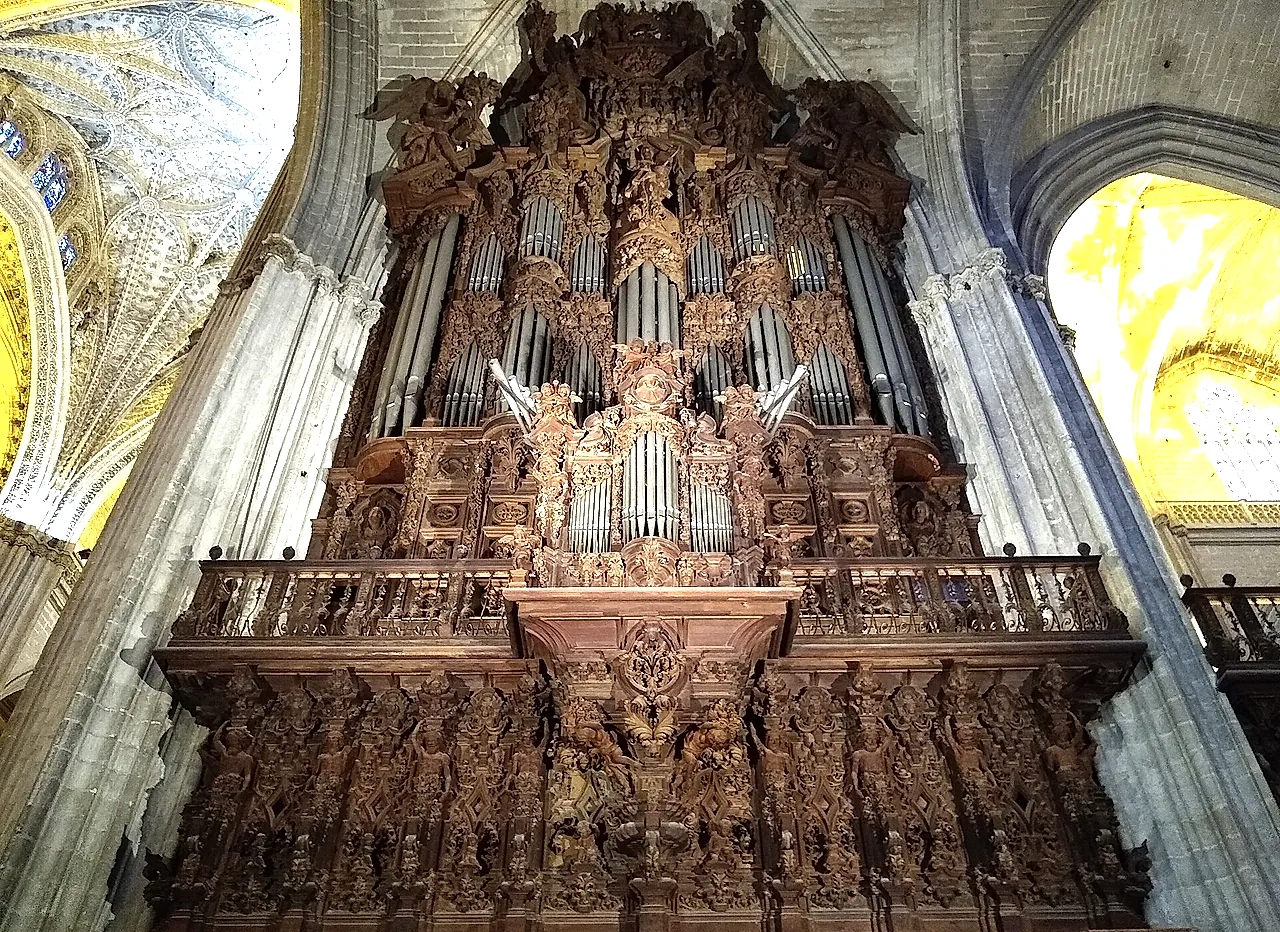
The choir has 117 Gothic-Mudéjar wooden stalls, a Renaissance grille by Fray Francisco de Salamanca (1518 to 1523) and a double organ built into its structure. Work and worship can change which areas are open, so what you see on the day may vary.
The Chapter House and the Sacristía Mayor
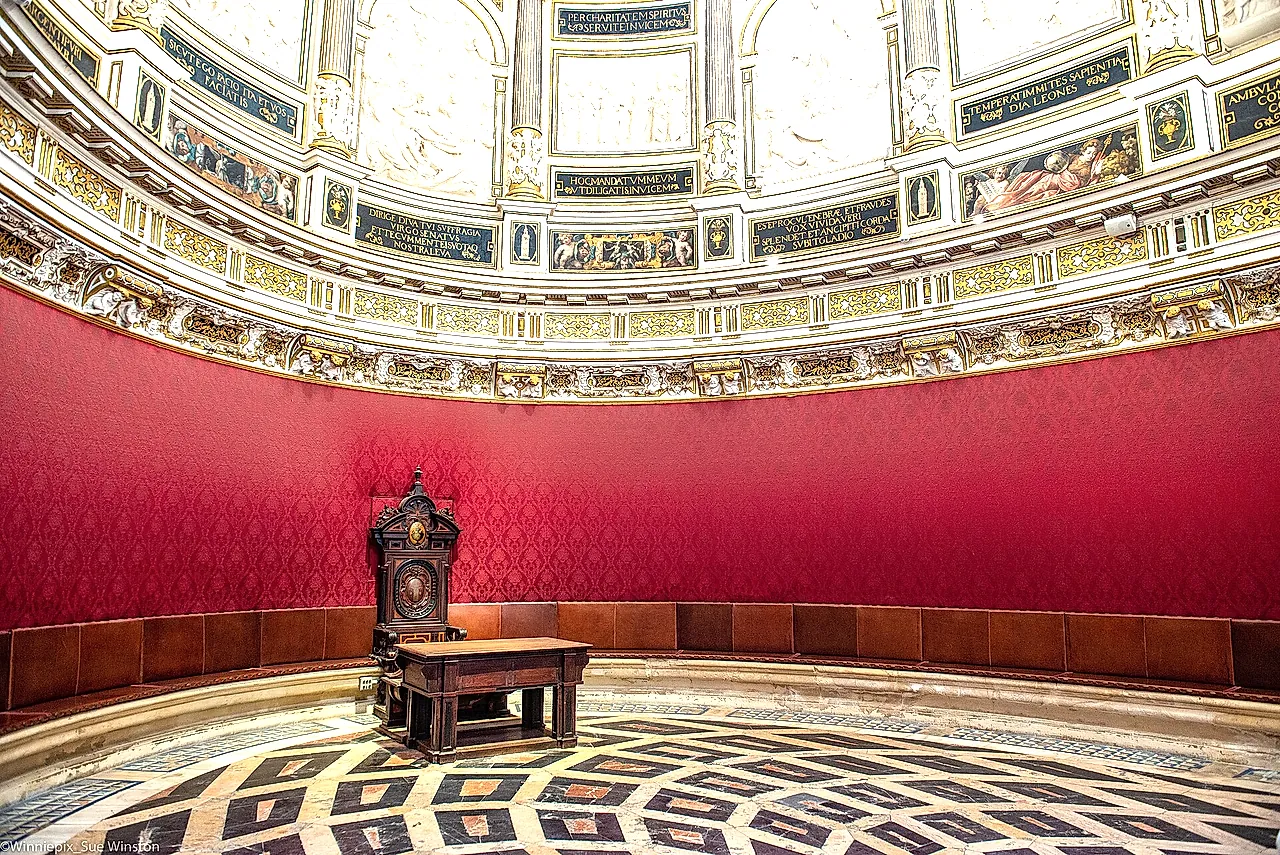
The Sala Capitular, or Chapter House, has an elliptical plan by Hernán Ruiz II: UNESCO calls it the first known example of an elliptical plan in the Western world. Its vault carries a series of paintings by Murillo from 1667, with the Immaculate Conception at the centre.
Next to it, the Sacristía Mayor is a Renaissance work. The Royal Chapel, with the tombs of Alfonso X and his mother Beatrice of Swabia, is reserved for worship and prayer and is not part of the visitor route, according to the Cabildo's rules.